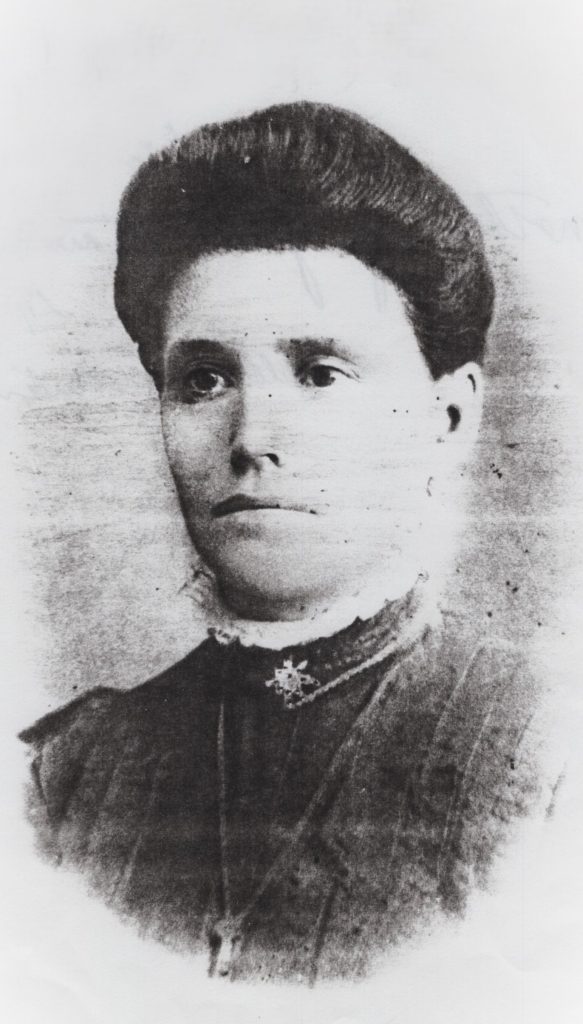

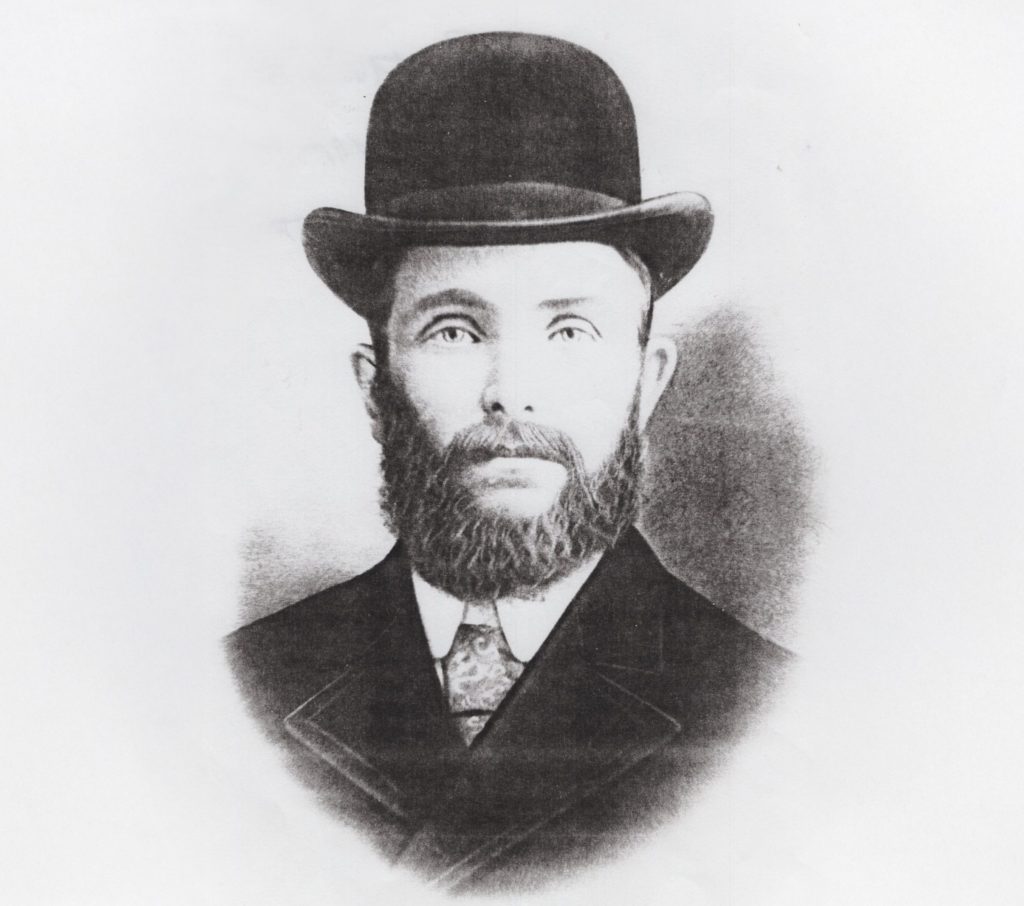
Ratchesky Family
As related by Edith Martin Gelmon:
“My grandparents, Louis and Dena Ratchesky and their three young daughters, Gertie, Lottie and Ida, left Russia just before the turn of the century.
“Both my grandparents’ families lived in the same village for several generations and owned a small turpentine factory. My grandfather, who wanted his children to be educated, made sure that a tutor came to their home and the girls were given lessons at an early age.
“When my grandfather’s cousins moved to America he was the only one left to run the business and operate the factory. My grandfather always thought of Russia as his “homeland” and he was reluctant to leave. However, an unexpected incident changed his mind.
“One hot summer afternoon a group of soldiers galloped into the village. They stopped at the Inn to quench their thirst and learned that the factory in the village belonged to Jews. So they felt it was their duty to burn it to the ground.
“Left without a livelihood, my grandfather realized how right the others had been to get out of Russia. As soon as he was able to make arrangements to go to America, the family left.
“First, there was a long, rough and bumpy ride in a wagon to the railway station; then a train trip to the port where they were able to board the ship taking them to their new home.
“Traveling steerage for more than twenty days in cramped, crowded quarters was an experience none of them ever forgot. After they reached Boston in 1901, my grandfather found some menial work where his lack of English did not present a problem.
“In 1903 another daughter, Eva, was born. Several years later my grandfather learned that if he became a homesteader in Alberta he would be given some land. The idea of being independent and owning a bit of land was a real incentive. No Jew in Russia was allowed to own land.
“So once again the family packed their belongings, and after a long, tedious ride by train, they reached Calgary in 1906. They were allocated a farm near Cochrane, about twenty-five minutes west of the city.
“The land was completely covered in small rocks, and the work of clearing it was exhausting. My grandfather’s health began to fail, and after several years, the family left the farm and moved to Calgary. To help with finances my grandmother Dena made meals for the unmarried men in the neighborhood.
“Gertie, the eldest daughter, was able to find work as a sales clerk, and in 1909 Gertie married Morris Martin.
“Later that same year my grandfather, Louis Ratchesky, died at the age of forty-seven. The following year my grandmother opened a grocery store on the corner of 6th Avenue and 4th Street E. With the help of her three younger daughters she was able to manage the business. When the girls could stay in the store, she often gave Hebrew lessons.
“When Lottie married Phillip Adelberg and moved to Saskatchewan, the couple persuaded my grandmother and the two younger sisters to join them. A few years Ida met Charles Margolus, married him and moved to Edmonton, where they were joined by her mother and Eva.
“Eva worked in Kline’s Jewelry store until she married Peter Basin of Regina and moved there with him.
“Dena Ratchesky was a strong-willed lady. It was of utmost importance for her to be independent and, with the help of her daughters, she was. In her later years she visited each of her children and met her grandchildren.
“When she was no longer able to travel it was her wish to move into the Jewish Old Folks Home in Winnipeg, then the only such facility in the west.
“Dena Ratchesky died at the age of 72 in 1940. Her children had her remains brought back to Calgary so that she could be buried near her husband.”